It is an effortless technique which you can do in a comfortable chair – you don’t have to be able to be an expert at yoga!
No change in lifestyle is necessary; you just add 20 minutes of profound relaxation of mind and body to your routine.
The first step is to come to an introductory talk
Introductory talks are free of charge, last about an hour and involve no commitment to learn. They can take place at our centre in the City or at your home or office.
The presentation covers:
What TM is and how it works
What you can expect to get out of the practice
Scientific research
Where TM comes from
How it differs from other kinds of meditation and relaxation
Learning TM
You learn TM in 4 sessions, which must be on consecutive days and last about 1½ hours. By the end of the course you will be meditating on your own at home.
Follow-up programme
After the initial 4 sessions, we meet after a week, after another 2 weeks, after a month and again after another month.
These meetings ensure you are meditating correctly and are enjoying the benefits.
The frequency of our sessions reduces as you become confident and comfortable with the technique. However, if you need any more support during these three months, you can have as much as you need.
This is all included in the course fee.
The course fee also includes our optional monthly meditators’ meetings for 6 months after you have learned (after that there is a nominal charge).
So there is quite a lot of encouragement and support to get you going when you learn TM.
After the course
TM will just be an enjoyable part of your daily routine. However, there is a range of meditators’ meetings, weekend courses and advanced courses for those who wish to participate
Transcendental Meditation is unique. It brings about a deep inner tranquillity that is both relaxing and revitalizing. This dissolves stress and fatigue, promoting happiness, health, creativity and clear thinking.
Transcendental Meditation (TM) is taught by experienced, highly trained teachers, and comes from a distinguished tradition. Your course is tailor-made for you, giving you personal attention to ensure the best results.
TM does not require any change in lifestyle or beliefs. In fact, it works whether you believe in it or not, and its benefits have been confirmed by an extensive body of scientific research.
It is easy to learn, and can be practiced by anyone. Perhaps this is why over 5 million people worldwide, and almost 200,000 in the UK, have learned the technique.
A lifestyle: There is no need to change one’s lifestyle to start TM. No dietary restrictions, no special clothes, no sandals!
A philosophy or system of beliefs: No belief is needed for TM to work, not even a belief in the technique itself. It’s not necessary to understand Newton’s law of gravity in order to fall!
A religion: Transcendental Meditation does not involve any religious belief or practice. People of all religions learn TM, including many ministers, rabbis, and priests who recommend it to their congregations.
Concentration: Concentration is a rigid fixing of the mind on one particular point, holding the attention there for as long as possible. Concentration is not a part of Transcendental Meditation.
Contemplation: Contemplation is thinking about something (a problem, a philosophical idea) or just letting the mind wander along without any particular direction. TM is a very specific practice, very different from contemplation, reflection, or day-dreaming.
And finally……..Transcendental Meditation is not difficult!
A variety of physiological indicators have been used to show that TM produces very deep rest, even though it is only practised for 20 minutes at a time. This allows you to ‘recharge’ and build up energy for the day.
Scientific research published in Psychosomatic Medicine and the International Journal of Neuroscience has shown that TM produces high level of EEG coherence. In other words, waves in the left and right hemispheres of the brain start to work in synchrony.
This increased coherence has been shown in other studies to correlate to a wide variety of benefits, including:
Increased fluency of verbal creativity (r=.71)
Increased efficiency in learning new concepts (r=.50)
Higher verbal IQ and decreased neuroticism (r=.63)
Increased neurological efficiency as measured by faster recovery of the paired H-reflex (r=.60)
It has also been found that during TM the percentage of the brain used to respond to stimuli increases.
To find out more please click one of the links below:
Students at Maharishi International University in Fairfield, Iowa, who regularly practised Transcendental Meditation, increased significantly in intelligence over a 2-year period, compared to control subjects from another Iowa university.
This finding corroborates the results of two other studies showing increased IQ in Maharishi International University students.
*Reference I: Transcendental Meditation and improved performance on intelligence-related measures: A longitudinal study, Personality and Individual Differences 12: 1105-1116, 1991. Reference II: Longitudinal effects of the Transcendental Meditation and TM-Sidhi programme on cognitive ability and cognitive style, Perceptual and Motor Skills 62: 731738, 1986.
This study used the Torrance Tests of Creative Thinking to measure figural and verbal creativity in a control group and in a group that subsequently learned the Transcendental Meditation technique.
On the posttest 5 months later, the Transcendental Meditation group scored significantly higher on figural originality and flexibility and on verbal fluency.
*Reference I: The TM technique and creativity: A longitudinal study of Cornell University undergraduates, Journal of Creative Behavior 13: 169-190, 1979. Reference II: A psychological investigation into the source of the effect of the Transcendental Meditation technique, (Ph.D. dissertation, York University) Dissertations Abstracts International 38, 7-B: 33723373, 1978.
Field independence has been associated with a greater ability to assimilate and structure experience, greater organisation of mind and cognitive clarity, improved memory, greater creative expression, and a stable internal frame of reference.
The results show that practice of the Transcendental Meditation technique develops greater field independence. This improvement in Transcendental Meditation meditators is remarkable because it was previously thought that these basic perceptual abilities do not improve beyond early adulthood.
*Reference I: Influence of Transcendental Meditation upon autokinetic perception, Perceptual Motor Skills 39: 1031-1034, 1974. Reference II: Longitudinal effects of the Transcendental Meditation and TM-Sidhi programme on cognitive ability and cognitive style, Perceptual and Motor Skills 62: 731738, 1986.
College students instructed in Transcendental Meditation displayed significant improvements in performance over a 2-week period on a perceptual and short-term memory test involving the identification of familiar letter sequences presented rapidly.
They were compared with subjects randomly assigned to a routine of twice-daily rest with eyes closed, and with subjects who made no change in their daily routine.
*Reference: Meditation and flexibility of visual perception and verbal problem solving, Memory and Cognition 10: 207215, 1982.
EEG coherence increases between and within the cerebral hemispheres during Transcendental Meditation. EEG coherence is a quantitative index of the degree of long-range spatial ordering of the brain waves.
The chart on the left shows that for a 2-week meditator, EEG coherence increased during the period of meditation. The chart on the right, of a 2-year meditator, shows high levels of coherence even before meditation began, spreading of coherence to high and lower frequencies about half way through the meditation period, and continuing high coherence even into the eyes-opened period after meditation.
*Reference I: The Coherence Spectral Array (COSPAR) and its application to the study of spatial ordering in the EEG, Proceedings of the San Diego Biomedical Symposium 15: 1976. Reference II: Electrophysiologic characteristics of respiratory suspension periods occurring during the practice of the Transcendental Meditation programme, Psychosomatic Medicine 46: 267-276, 1984.
Self actualisation refers to realizing more of one’s inner potential, expressed in every area of life. A statistical meta-analysis of all available studies-of 42 independent studies-indicated that the effect of Transcendental Meditation on increasing self-actualisation is markedly greater than that of other forms of meditation and relaxation. This analysis statistically controlled for length of treatment and quality of research design.
*Reference: Transcendental Meditation, self-actualisation, and psychological health: A conceptual overview and statistical meta-analysis, Journal of Social Behavior and Personality 6: 189248, 1991.
One month after beginning Transcendental Meditation, subjects experienced an improved self-concept in comparison to before learning the technique.
Transcendental Meditation participants developed a more strongly defined self-concept and also came to perceive their “actual self” as significantly closer to their “ideal self.” No similar changes were observed for matched controls.
*Reference I: Effects of Transcendental Meditation on self-identity indices and personality, British Journal of Psychology 73: 5768, 1982. Reference II: Psychological research on the effects of the Transcendental Meditation technique on a number of personality variables, Gedrag: Tijdschrift voor Psychologie (Behavior: Journal of Psychology) 4: 206218, 1976.
This three-month study of managers and employees who regularly practised the Transcendental Meditation technique in a Fortune 100 manufacturing company and a smaller distribution-sales company showed that Transcendental Meditation practitioners displayed more relaxed physiological functioning, a greater reduction in anxiety, and reduced tension on the job, when compared to control subjects with similar job positions in the same companies.
*Reference: A prospective study of the effects of the Transcendental Meditation programme in two business settings, Anxiety, Stress and Coping: International Journal 6: 245262, 1993.
A statistical meta-analysis conducted at Stanford University of all available studies-146 independent outcomes-indicated that the effect of the Transcendental Meditation programme on reducing anxiety as a character trait was much greater than that of all other meditation and relaxation techniques, including muscle relaxation.
This analysis also showed that the positive Transcendental Meditation result could not be attributed to subject expectation, experimenter bias, or quality of research design.
*Reference: Differential effects of relaxation techniques on trait anxiety: A meta-analysis, Journal of Clinical Psychology 45: 957974, 1989.
It makes good sense to think that the profound state of rest gained when practising TM – deeper than sleep – will be good for your body. One of the commonest reported effects after learning is sleeping better and improved health. But don’t take our word for it: hundreds of doctors in the UK both practise TM and recommend it to their patients.
Scientific research shows that many illnesses tend to improve with regular practice of TM including insomnia, anxiety, high blood pressure, angina, hardening of the arteries, abuse of alcohol, cigarettes and non-prescription drugs, migraine, ulcers, asthma. Many of these are stress related.
But the benefits of TM for the body are not limited to the cure and prevention of particular medical conditions. By dissolving stress and tension TM enables you to unfold your full potential, enriching all aspects of your life.
To find out more please click one of the links below:
In a clinical experiment with elderly African Americans (mean age 66) dwelling in an inner-city community, Transcendental Meditation was compared with the most widely used method of producing physiological relaxation.
Subjects who had moderately elevated blood pressure levels were randomly assigned Transcendental Meditation, Progressive Muscle Relaxation (PMR), or usual care.
Over a 3-month interval, systolic and diastolic blood pressure dropped by 10.6 and 5.9 mm Hg, respectively, in the Transcendental Meditation group, and 4.0 and 2.1. mm Hg in the PMR group, with virtually no change in the usual care group.
A second random assignment study with the elderly conducted at Harvard found similar blood pressure changes produced by Transcendental Meditation over 3 months (11 mm Hg for systolic blood pressure).
*Reference I: In search of an optimal behavioral treatment for hypertension: A review and focus on Transcendental Meditation, chapter in Personality, Elevated Blood Pressure, and Essential Hypertension (Washington, D.C., Hemisphere Publishing, 1992). Reference II: Transcendental Meditation, mindfulness, and longevity: An experimental study with the elderly, Journal of Personality and Social Psychology 57(6): 950 964, 1989.
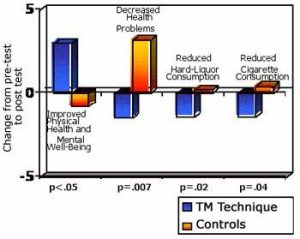
In two companies that introduced the Transcendental Meditation programme, managers and employees who regularly practised Transcendental Meditation improved significantly in overall physical health, mental well-being, and vitality when compared to control subjects with similar jobs in the same companies.
Transcendental Meditation practitioners also reported significant reductions in health problems such as headaches and backaches, improved quality of sleep, and a significant reduction in the use of hard liquor and cigarettes, compared to personnel in control groups.
*Reference: A prospective study of the effects of the Transcendental Meditation programme in two business settings, Anxiety, Stress and Coping: International Journal 6: 245262, 1993.
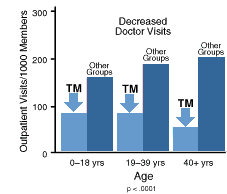
A study of health insurance statistics on over 2,000 people practicing the Transcendental Meditation programme over a 5-year period found that the Transcendental Meditation meditators consistently had less than half the hospitalization than did other groups with comparable age, gender, profession, and insurance terms.
The difference between the Transcendental Meditation and non-Transcendental Meditation groups increased in older-age brackets.
In addition, the Transcendental Meditation meditators had fewer incidents of illness in 17 medical treatment categories, including 87% less hospitalization for heart disease and 55% less for cancer.
Reference I: Medical care utilisation and the Transcendental Meditation programme, Psychosomatic Medicine 49: 493507, 1987. Reference II: Reduced health care utilisation in Transcendental Meditation practitioners, presented at the conference of the Society for Behavioral Medicine, Washington, D.C., March 22, 1987.
Reduced Need for Medical Care:Decreased Doctor Visits
A study of health insurance statistics on over 2,000 people practicing the Transcendental Meditation programme over a 5-year period found that the Transcendental Meditation meditators consistently had less than half the hospitalization than did other groups with comparable age, gender, profession, and insurance terms.
The difference between the Transcendental Meditation and non-Transcendental Meditation groups increased in older-age brackets. In addition, the Transcendental Meditation meditators had fewer incidents of illness in 17 medical treatment categories, including 87% less hospitalization for heart disease and 55% less for cancer.
*Reference I: Medical care utilisation and the Transcendental Meditation programme, Psychosomatic Medicine 49: 493507, 1987. Reference II: Reduced health care utilisation in Transcendental Meditation practitioners, presented at the conference of the Society for Behavioral Medicine, Washington, D.C., March 22, 1987.
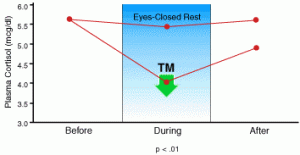
Increased levels of the hormone cortisol in the circulation are well established correlates of both acute and chronic stress.
The study shows that plasma cortisol decreased during Transcendental Meditation, whereas it did not change significantly in control subjects during ordinary relaxation.
Sources: The transcendental meditation technique, adrenocortical activity, and implications for stress, Experientia 34(5): 618-619, 1978. Adrenocortical activity during meditation, Hormones and Behavior 10(1): 5460, 1978.
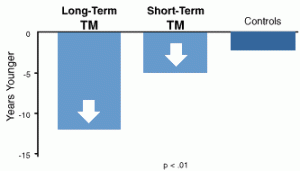
Biological age measures how old a person is physiologically. As a group, long-term meditators who had been practicing Transcendental Meditation for more than 5 years were physiologically 12 years younger than their chronological age, as measured by reduction of blood pressure, and better near-point vision and auditory discrimination.
Short-term meditators were physiologically 5 years younger than their chronological age. The study controlled for the effects of diet and exercise.
*Reference: The Effects of the Transcendental Meditation and TM-Sidhi programme on the Ageing process, International Journal of Neuroscience 16 (1): 5358, 1982.
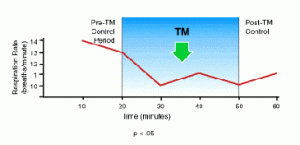
Subjects were measured for changes in breathing rate during the practice of the Transcendental Meditation technique.
Breath rate fell from about 14 breaths per minute to about 11 breaths per minute, indicating the Transcendental Meditation technique produces a state of rest and relaxation. The change in breath rate is natural, effortless, and comfortable.
*Source: A wakeful hypometabolic physiologic state, American Journal of Physiology 22: 795799, 1971.
A meta-analysis, the preferred scientific procedure for drawing definitive conclusions from large bodies of research, found Transcendental Meditation produced a significant increase in basal skin resistance compared to eyes-closed rest, indicating profound relaxation.
Deep rest and relaxation were also indicated by greater decreases in respiration rates and plasma lactate levels compared to ordinary rest. These physiological changes occur spontaneously as the mind effortlessly settles to the state of restful alertness, pure consciousness.
*Source: Physiological differences between Transcendental Meditation and rest, American Psychologist 42: 879881, 1987.
A statistical meta-analysis of 198 independent treatment outcomes found that Transcendental Meditation produced a significantly larger reduction in tobacco, alcohol, and illicit drug use than either standard substance abuse treatments (including counseling, pharmacological treatments, relaxation training, and Twelve-step programmes) or prevention programmes (such as programmes to counteract peer-pressure and promote personal development).
This meta-analysis controlled for strength of study design and included both heavy and casual users.
Whereas the effects of conventional programmes typically decrease sharply by 3 months, effects of Transcendental Meditation on total abstinence from tobacco, alcohol, and illicit drug ranged from 51%89% over an 1822 month period.
*Reference I: Treating and preventing alcohol, nicotine, and drug abuse through Transcendental Meditation: A review and statistical meta-analysis, Alcoholism Treatment Quarterly 11: 13-87, 1994. Reference II: Effectiveness of the Transcendental Meditation programme in preventing and treating substance misuse: A review, International Journal of the Addictions 26: 293-325, 1991.
Research on American businesses where employees have been taught Transcendental Meditation found that they had significantly:
Less anxiety, job tension, insomnia, and fatigue
Reduced cigarette and hard liquor use
Improved health and fewer health complaints
Enhanced effectiveness, job satisfaction, and work/personal relationships
“The key to success in today’s world is innovation, creativity – beyond anything else. If you create products and services that are clearly better than what your competitors produce, you’re going to succeed in today’s world.
“Having the ability to enhance one’s own creativity as well as that of one’s employees seems to me to be the ultimate responsibility of a manager within a company. And the Transcendental Meditation program allows that creativity enhancement to take place beyond anything I’ve ever seen.”
– Burton A. Dole Jr., Former Chairman and CEO, Puritan-Bennett Corp. Leading manufacturer of respiratory products.
To find out more please click one of the links below:
In this study subjects practicing the Transcendental Meditation programme showed significant improvements at work, compared with members of a control group.
Job performance and job satisfaction increased while desire to change jobs decreased. People at every level of the organisation benefited from practicing the Transcendental Meditation programme.
*Reference: Transcendental Meditation and productivity, Academy of Management Journal 17 (2): 362368, 1974.
This study found significant improvements in relations with supervisors and co-workers after an average of 11 months practicing Transcendental Meditation, in comparison to control subjects.
And while Transcendental Meditation practitioners reported that they felt less anxiety about promotion (shown by reduced climb orientation), their fellow employees saw them as moving ahead quickly. People at every level of the organisation benefited from practicing the Transcendental Meditation programme.
*Reference: Transcendental Meditation and productivity, Academy of Management Journal 17 (2): 362368, 1974.
Workplace Studies
Read some of our case studies for more information.
After implementation of the TM programme at Sumitomo Heavy Industries, a high technology company with about 8000 employees, research on the project was carried out by the National Institute of Industrial Health of the Japanese Government’s Ministry of Labour.
The study evaluated 447 participating managers and employees in comparison to 321 controls at the same company.
Participants showed substantial improvements in physical and mental health, including significant reductions in anxiety, insomnia, depression, emotional instability, physical complaints and digestive problems.
Managers and employees in a large Midwestern manufacturing plant of the Fortune 100 company, as well as those in a Pennsylvania distribution company, learned Transcendental Meditation (company names withheld in accord with corporate policies).
After 3 months the employees who learned TM were compared with a control group of non-meditating employees who worked at similar job sites, held similar job positions, had similar demographics (age, education etc) and similar personality characteristic before the study began.
The results of the study were published in the international scientific journal Anxiety, Stress and Coping (6,245-262,1993). Researchers reported that, compared to controls, the group that learned Transcendental Meditation had significantly:
Less anxiety, job tension, insomnia and fatigue
Reduced cigarette and hard liquor use
Improved health and fewer health complaints
Enhanced effectiveness, job satisfaction, and work/personal relationships
Improved Health and More Positive Health Habits
*Reference: Anxiety, Stress & Coping 6: 245-262, 1993. As found in other studies, the effectiveness of Transcendental Meditation in reducing anxiety, smoking and drinking, and in promoting personal development was substantially greater than other forms of meditation or relaxation.
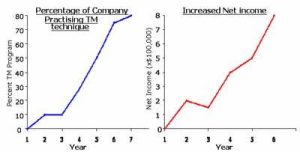
“Over a six year period Transcendental Meditation was introduced to over 70% of our managers and employees, and they were encouraged to meditate on company time at the plant.
“As a result, productivity, sales, and profitability all improved dramatically, the creativity of our research department went up, and absenteeism dropped sharply, as did sick days and injuries. TM paid for itself in two months on the basis of reduced absenteeism alone. TM has been my best business decision.”
– R.W. Montgomery Jr., former CEO, H.A. Montgomery Co.
The individual is the unit, the building block of society. With Transcendental Meditation, we can give people a technique to reduce stress and help them be happier and more fulfilled, and so society as a whole will also have these qualities.
A person free from stress naturally generates happiness and harmony in their surroundings and thereby contributes maximum to peace in the world.
Peace and Progress in Society
As well as reducing stress and negativity in individuals, Transcendental Meditation reduces the overall level of stress in society.
Many research studies have found that just 1% of a population practising Transcendental Meditation is sufficient to bring about a significant reduction in crime, sickness and accidents. This effect has been called the “Maharishi Effect” by scientists.
To find out more please click one of the links below:
Two studies using time-series impact assessment analysis found a significant reduction in weekly fatalities due to motor vehicle accidents, homicides, and suicides in the United States (19821985) and Canada (19831985) when the size of the groups practicing the Transcendental Meditation and TM-Sidhi programme at Maharishi International University in Fairfield, Iowa, exceeded the square root of one percent of the U.S. population, or of the U.S. and Canadian population together for an effect seen in Canada.
During periods when the size of the groups were smaller than the square root of one percent of the U.S. and Canadian populations, fatality rates were higher.
The use of time series methodology ensures that these effects could not be due to random variation, seasonal cycles, or long-term trends in the two countries.
*Reference: Test of a field theory of consciousness and social change: Time series analysis of participation in the TM-Sidhi programme and reduction in violent death in the U.S. Social Indicators Research 22: 399418, 1990.
A prospective study was performed to assess the effects of the group practice of the Transcendental Meditation and TM-Sidhi programme on the quality of life in Rhode Island.
The number of TM-Sidhi programme participants was sufficient to create the Maharishi Effect for the entire state. A time-series analysis was performed on a monthly index that assessed the quality of life in Rhode Island in comparison to a demographically matched control state.
During the experimental period, an index comprised of the following variables significantly decreased: crime, motor vehicle fatalities, auto accidents, deaths, alcoholic beverage and cigarette consumption, unemployment, and pollution.
In the figure above, an increase illustrates an improvement in the index of all these variables taken together.
*Reference: Consciousness as a field: The Transcendental Meditation and TM-Sidhi programme and changes in social indicators, The Journal of Mind and Behavior 8: 67103, 1987.
The results show that 24 cities in which 1% of the population had been instructed in the Transcendental Meditation programme by 1972 displayed decreased crime rates during the next year (1973) and decreased crime rate trends during subsequent years (19721977) in comparison to 19671972, in contrast to control cities matched for geographic region, population, college population, and crime rate.
*Reference: The Transcendental Meditation programme and crime rate change in a sample of forty-eight cities, Journal of Crime and Justice 4: 2545, 1981.
This study indicates that group practice of the Transcendental Meditation and TM-Sidhi programme improved the quality of life in Israel as measured by improvement on an index comprising crime rate, traffic accidents, fires, and the number of war deaths in Lebanon, and by increases in the national stock market and improvements in national mood.
The chart above shows the strong correspondence between the number of Transcendental Meditation-Sidhi programme participants in the group in Jerusalem and a composite index of all the above variables.
*Reference: International peace project in the Middle East: Effects of the Maharishi Technology of the Unified Field, Journal of Conflict Resolution 32: 776812, 1988.
Maharishi Mahesh Yogi, founder of the worldwide Transcendental Meditation Movement, after graduating from Allahabad University with a degree in physics, studied for thirteen years with Swami Brahmananda Saraswati, the world’s foremost exponent of the ancient Vedic Science of consciousness.
Then in 1955, after spending two years in silence in the Himalayas, Maharishi began teaching his Transcendental Meditation technique. In 1957 Maharishi founded the Transcendental Meditation (TM) movement and began the first of his many world tours to bring his technique to people on all continents. He has authored a number of books, including on the Bhagavad-Gita A New Translation and Commentary with Sanskrit Text, The Science of Being and Art of Living, and Love and God.
Transcendental Meditation, which you developed, has enjoyed phenomenal international success. What is it, exactly?
Transcendental Meditation is a simple, natural program for the mind, a spontaneous, effortless march of the mind to its own unbounded essence. Through Transcendental Meditation, the mind unfolds its potential for unlimited awareness, transcendental awareness, Unity Consciousness — a lively field of all potential, where every possibility is naturally available to the conscious mind. The conscious mind becomes aware of its own unbounded dignity, its unbounded essence, its infinite potential.
Transcendental Meditation provides a way for the conscious mind to fathom the whole range of its existence-active and silent, point and infinity. It is not a set of beliefs, a philosophy, a Iifestyle, or a religion. It’s an experience, a mental technique one practices every day for fifteen or twenty minutes.
What are some of its practical benefits?
Scientific experiments with people who practice Transcendental Meditation indicate that it tends to produce normalization in all areas of life. It reduces stress, improves health, enriches mental functioning, enhances personal relationships, and increases job productivity and job satisfaction.
Can other kinds of meditation produce similar results?
They can, of course. However, one advantage of Transcendental Meditation is its extreme simplicity. It is very simple for anyone to learn. In addition, it has been the object of scientific research for over thirty years, and its beneficial effects are well-documented.
What gives Transcendental Meditation such great potential for positive change?
To answer that, we must look at the nature of creation itself. Creation has two sides: intelligence, which is the cause of everything, and the manifestations of intelligence, which are the physical and psychological features of the everyday world. Because Transcendental Meditation directly approaches intelligence, rather than the manifestations of intelligence, it solves problems by introducing harmony and well-being at the most basic level, and not by dealing with problems themselves. That’s why it is so effective.
Consider this example. The gardener supplies water to the root of a tree. That water, that nourishment, then reaches all parts of the tree-leaves, branches, flowers, fruit-though the sap. We can think of the sap as analogous to intelligence and the green leaves or yellow flowers as analogous to the manifestations of the intelligence. The leaves and flowers are the intelligence of the sap, after it has been transformed. So intelligence-like the leaves and flowers of a tree appears as the many different forms of manifest life. Those manifestations include every aspect of existence, from the material and physiological, through the psychological, intellectual, and spiritual. All of those features of life come from transformations of intelligence.
In meditation, we directly meet this essential intelligence. Therefore, we have the possibility of nourishing all of its other levels, and thus all levels of manifestation, in a way that is harmoniously related to the whole universe.
How is Transcendental Meditation different from the various other forms of meditation?
The basic difference is that Transcendental Meditation, in addition to its simplicity, concerns itself only with the mind. Other systems often involve some additional aspects with which the mind is associated, such as breathing or physical exercises. They can be a little complicated because they deal with so many things. But with Transcendental Meditation there is no possibility of any interference. So we say this is the all-simple program, enabling the conscious mind to fathom the whole range of its existence.
Transcendental Meditation ranges from active mind-or performing mind-to quiet mind-or resting mind. In this resting mind, one has purity and simplicity, uninvolved with anything other than the mind, uninvolved with any other practice. In Transcendental Meditation, because we deal only with the mind, we nourish all expressions of intelligence. The mind meditates, gains Transcendental Consciousness and brings about transformation in different fields of manifestation. All fields of life, which are the expression of intelligence, are nourished or transformed and made better through experiencing Transcendental Consciousness.
The mind, of course, is always concerned with other aspects, such as the physiology of the body, the environment, and the whole universe for that matter. But since Transcendental Meditation deals only with the performance of the mind, from its active states to its settled state, it remains unconcerned with those other aspects, though it deals with them all, because intelligence deals with them all.
Can you offer us more understanding of the “settled state”? Why is it so important?
The settled state, as we know from physics, is the state of being from which nature’s intelligence functions and administers the whole universe. The settled state is where we find the principle of least action, through which natural law operates. It is Important because it is the fundamental level of life.
And being in the “settled state,” or the state of least action, is equivalent to transcendence?
Yes. Transcendence is the state where the mind has moved beyond everything other than itself. That means it has transcended all kinds of activity, small and big, and it has settled down in its own authority, in its own sovereignty, into the unbounded dignity of its own intelligence. And in this state, transcendental consciousness turns out to be a lively field of all possibilities.
So, while the mind usually operates in an active, or “unsettled” state, Transcendental Meditation takes it to the settled state.
Exactly! To understand this process, we must ask: how does the mind work? What does it do? We know the mind is always subject to its own nature, which is to evolve. Evolution is the essential nature of existence. The mind is always searching for more and more and more-more knowledge, more happiness. The mind moves on, always toward more and more.
But the mind has two sides. One side is in the direction of diversity, in the direction of many, many. The other is in the direction of unity, the unified state. Gaining unity means rising to Transcendental Consciousness, the settled state, while gaining diversity means moving toward more and more activity. Unity is on one side, diversity is on the other side. Both sides belong to the nature of the mind.
The mind moves to diversity in search of more and more, and it moves in the direction of unity-a quiet state of unbounded awareness, unbounded consciousness, unbounded intelligence-in search of less and less. The move of the mind from its active state to its quiet state is part of the nature of mind itself, and we say the mind in that state is at one with the unified field of all the laws of nature. Its potential is unbounded, infinite; it enters the field of all possibilities. When the mind gains its unified state, that is Transcendental Meditation.
What is the nature of transcendental consciousness?
It is unity consciousness, an encounter with the field of unified consciousness. In transcendental consciousness, the mind experiences itself, intelligence experiences itself. The mind is the observer of its own reality. In that state, the mind is transcendental consciousness.
Just as the quiet surface of the ocean is the source from which all waves arise, so the self-fulfilled state of mind, which we call transcendental consciousness, is the source of all activity. We call it the unified field of natural law, from which all the different laws of nature emerge and conduct their specific activities in the relative world.
Is the state of unbounded awareness maintained during the day, even after the formal meditation period ends?
As a result of regular practice, it is maintained more and more. The situation is as though we were to take a white cloth and dip it in yellow dye. We bring the cloth out and put in the sun and the yellow fades away. Then we put it back again and again into the color and back again and again into the sun. It keeps on becoming yellow and yellow and yellow, then fading, fading, fading. But over time the color becomes permanent. That happens to the mind through regular practice. That unbounded awareness, that pure consciousness, the field of all the laws of nature, becomes ingrained in all activities of the mind. Then the mind begins to live in Unity Consciousness. That’s how Unity Consciousness becomes a living reality.
How does a person learn to practice Transcendental Meditation?
Through instruction. What happens is that the mind, in its active state, learns to experience its own less active states, experience its progressively minimized active states, until eventually it cognizes the transcendental state of consciousness.
But in learning to do this, we must remember that the mind has usually been allowed to wander around so long in the realm of knowledge or power or the pursuit of happiness that it must be taught how to know itself again. That’s why teaching becomes necessary. After learning Transcendental Meditation one knows what the natural state is. But to realize this, one has to be liberated from unnatural programs, performances and experiences.
Most people have no experience with Transcendental Consciousness, pure consciousness, the pure nature of the mind. They are aware of active mind, which is the waking state of consciousness. They are also aware of the complete forgetfulness of the mind, the sleep state. And they are aware of the middle stage, the dreaming mind. But they are not aware of pure or Transcendental Consciousness. So the experience of that consciousness is taught in Transcendental Meditation, though it’s nothing other than the very nature of the mind.
When people begin to practice Transcendental Meditation, do they experience purging or cleansing effects, when negative things come up? Does moving into that unified state of consciousness involve a painful period?
We think about a cloth again. When the cloth is very, very dirty, you begin to rinse it in soap. You rinse it once and then twice. But as it gets cleaner, soiled patches which didn’t seem to be there before begin to appear.
However, if you keep on washing and washing, those patches start to fade away and fade away more, then they fade away completely. Similarly, when old habits of stress and straining begin to be neutralized through Transcendental Meditation, a person may feel discomfort as other, more subtle habits of stress come up, but only because the natural state is returning and the stress is leaving. This is part of gaining normality and natural status.
For example, some people may say, “I don’t worry about things like I used to. Does this mean I am losing myself, my identity?” To them, this normalization of the mind feels strange. They have been behaving with boundaries, in space and time, and now they wake up to unbounded awareness. So there is often a feeling of difference and strangeness at first.
You say that Transcendental Meditation is a program for the mind. What is its relationship to the intellect?
Transcendental Meditation does not involve intellect. Transcendental Meditation is an experience of the mind, from the active levels to the unified level. It’s just an innocent experience of active mind and an innocent experience of settled mind, silent mind.
Through certain other meditation practices, however, particularly those in which the intellect seeks God through recalling the qualities or names or virtues of God, the intellect is stimulated and begins to thrive. It does so increasingly in the presence of God, in the glory of God, in the dignity of God, in the grace of God, in the merciful nature of God. There may then come a point where intellect is in its natural state and comprehends the unbounded awareness of God, the merciful nature of God, the presence of God. The intellect, through pursuing God intellectually, can recognize its natural status as the mind wakes up to its unboundedness.
The intellect thus leads one to the settled state, a non-intellectual experience of pure being. The intellect can finally be enveloped by all the exalted qualities of God as it arrives at its natural state, the level of fundamental intelligence. That will be the same as Transcendental Consciousness, the union which recognizes the unbounded dignity of the light of God, the feeling of God, the experience of unboundedness, pure intelligence. But such is not the approach of Transcendental Meditation, which does not operate through the intellect.
What new applications are you currently exploring for Transcendental Meditation?
We are working in many directions-dealing with education, community planning, prison rehabilitation, and so on-but our primary focus is on promoting what we call “irreversible world peace.” We are seeking to establish several permanent groups of 7000 advanced transcendental meditators in various places around the planet. Their meditations will create a powerful coherent influence in the collective consciousness and neutralize built-up stress and tension in the world, creating an environment of progress and peace.
Our goal is to create Heaven on Earth, and we are taking practical steps to accomplish it.
What recent successes have you had in applying Transcendental Meditation to achieve this goal?
There have been many scientific studies validating the effectiveness of this program. Just now I could mention two recent demonstrations-one from the poorest country in the world and one from the richest.
For the last year, the president of Mozambique, His Excellency Joachim Alberto Chissano, has been organizing instruction in Transcendental Meditation for large numbers of his people. Recently, he credited their practice of this discipline with keeping the peace in Mozambique after many years of civil war.
During June and July of 1993, in Washington DC, about 4,000 experts in TM demonstrated the power of this technology to eliminate stress and create more coherence and harmony throughout a society. Scientists now report preliminary statistics from the Washington police showing a 13% drop in total violent crime during the demonstration compared to the same period in 1992. News reports show that president Clinton and Congress enjoyed much greater success and appreciation during the demonstration than either before or after it.
We feel very fulfilled by these results, and wish to invite every government to establish a coherence creating group in its capital city. This step will ensure that every government has a neat, clean, pure atmosphere in which to make decisions.
Transcendental Meditation comes from the Vedic tradition of ancient India. For thousands of years, teachers in this tradition have passed down the technique of TM from master to pupil.
In the first half of the 20th century the greatest exponent of this tradition was Swami Brahmananda Saraswati, whose leading pupil was Maharishi Mahesh Yogi.
Maharishi Mahesh Yogi, Founder of Transcendental Meditation
In 1957 Maharishi founded a worldwide organisation, offering TM as a simple technique suitable for ordinary people to combine with and enhance their daily lives.
He began his teaching in India and then travelled round the world many times, teaching TM everywhere he went.
In 1961 he began to train teachers of Transcendental Meditation, devising a lengthy and thorough series of courses to ensure that the technique would still be taught in the traditional way.
Today the technique is taught all over the world, and the traditional method is always followed, guaranteeing authenticity and effectiveness.
We all need stimulation, but when, over a long time, challenge turns to overload, we begin to feel stressed and feel life has got out of balance.
Transcendental Meditation (TM) is a simple technique which gives a unique quality of rest to mind and body. It allows stress and tiredness to be released in a natural way, resulting in greater energy, clarity and enjoyment of life.
At work, there is a growing need to make rapid decisions and deliver results. TM can help business performance by dissolving tension and stress, allowing clearer thinking, focused energy and creativity.
Hundreds of scientific studies conducted in leading research institutions around the world show the benefits to health, achievement and work / life balance.
Read some of our case studies for more information.
Transcendental Meditation books are available from www.maharishi.co.uk.
They also stock books and CDs about Maharishi Ayurveda.
Maharishi Ayurveda
Maharishi Ayurveda is a system of natural health for wellbeing, vitality and longevity. It includes:
Health consultations
Advice on diet and lifestyle
Herbal supplements
Treatments
Maharishi Ayurveda can help with many common health concerns, including:
Diet
Digestion
Sleep
Heart health
Mental / emotional imbalance
Joint and muscle pain
Weight imbalance
Men’s and women’s health
Consultations
Consultations are given by qualified Maharishi Ayurveda health practitioners.
Consulting practitioners in the UK are: Dr Donn Brennan, Dr Greg Watras and Dr Geoffrey Mead.
A personal health consultation includes:
Ayurvedic pulse diagnosis to determine mind / body type and imbalances
Assessment of health history
Advice on diet, digestion and daily routine
Treatments
Maharishi Ayurveda treatments clear toxins and balance and revitalise the mind and body.
Treatments are effortless and enjoyable and are carried out by specialist technicians at Maharishi Ayurveda Health Centres.
They include:
Panchakarma revitalisation therapy, a treatment taken residentially for 3-10 days.
Single health treatments for weight balance, for emotional balance, for lower back pain, for anti-ageing, for joint problems and for skin health and deep relaxation.
Herbal supplements
Maharishi Ayurveda herbal supplements enliven the body’s healing intelligence.
They bring balance to areas of health such as sleep, digestion and metabolism, immunity and allergies, mind and emotions, heart and liver and fertility.
There are also herbals for women’s and men’s health and for children, students and seniors.
Maharishi Ayurveda herbal supplements are made using authentic ayurvedic formulas and traditional processes to world-class standards.
Information
For an information pack and product catalogue, call 01695 51015, or email map@maharishi.co.uk.
There’s also a monthly e-newsletter which you can subscribe to at www.maharishi.co.uk.
If you are requesting an information pack, or if you are purchasing from Maharishi Ayurveda for the first time, please use OFFER CODE Z108.
Maharishi Ayurveda products will then send you a complimentary copy of a talk by Dr Donn Brennan, ‘Introduction to Maharishi Ayurveda.
This 70-minute live lecture on CD covers all the basic principles and includes a wealth of practical advice.
David Lynch: First of all its a real big honor to interview you, to talk to you Paul, and I’ve got to tell you I am not a professional interviewer. But I’m curious. So I’ll just ask you some things. And I’m curious – I assume some time in the sixties, set the stage, when did you first hear the word meditation and what did you make of it?
Paul McCartney: It was actually George Harrisons wife, Pattie, who had heard that Maharishi was coming to town. And she said we should all go. It was one of those things. And I was personally not in a good place. I think you know just over doing it in the sixties. So I was just not very, sort of, centered and I was looking for something. I think we all were. So we heard that Maharishi was going to have a meeting and give a lecture. So that was the first time Id heard about meditation. But we’d actually seen him when we were kids growing up in Liverpool. Because as you know he went around the world seven times to spread his message. And he was on TV. And we remembered this giggling little guy and we thought, we loved him. We just said he’s so cool! you know. And he was just on TV, and he was giving an interview and he would giggle — that fabulous laugh of his. And he was very entertaining and very attractive. So we all said that’s that guy! But then I say, he was giving a lecture.
David Lynch: Where was it?
Paul McCartney: In London.
David Lynch: But do you remember the place?
Paul McCartney: I don’t remember it. I think it was in Kensington, Chelsea or somewhere. But, so that was the first time I heard about it and we all went along to listen.
David Lynch: And in the talk, what feeling, you know, came over you about what he was saying, his message?
*Note: Paul McCartney all the Beatles learned Transcendental Meditation from Maharishi Mahesh Yogi in the 1960′s.
Now the David Lynch Foundation is teaching at-risk children Transcendental Meditation to help overcome classroom stress and other social issues.
Russell Brand discusses Transcendental Meditation with Howard Stern
Howard Stern: You suffer from OCD (obsessive compulsive disorder) I know that.
Lady: Does he have OCD too?
Howard Stern: Yes he does and he practice Transcendental Meditation.
Russell Brand: I do I went into it, yeah, yeah the unified field, I just started it (Transcendental Meditation) about that time actually. I learned it off this fellow named Bobby Roth. He taught me around the time I met Katie it was very very succinct and helpful. It helped me because from that date from that mad acid rush of feeling like I was in love where she just went alright whats your favorite film just like as if you’re talking down you know like I don’t know anything man. Then everything was okay. From then I learned Transcendental Meditation, I went off to some prison in Louisiana to make a documentary and everything changed honestly. Not cheated, I’ve done nothing wrong not gone off with other birds, not messed around.
Howard Stern: Do you think that TM, I’ve been doing Transcendental Meditation for 36 years and when I started I stopped smoking spontaneously, a lot of things happened to me. So do you think from the TM that even your mind changed about women?
– Sir John Harvey-Jones, Broadcaster and former Chairman of ICI.
“I believe in Transcendental Meditation. I have always told the truth when asked, and when I believe something can help I feel obliged to say so…My daughter Gaby had tried Transcendental Meditation and persuaded me to try it too, even before my first stroke. The two-day course cost a bomb but the logic of it appealed to me. After all, what is the point of relaxing the body if the brain is not rested as well.”
The effect, he says, has been dramatic: “I am a much easier person to live with. To coin a phrase, I don’t make a drama out of a crisis. If I gave it up now, my wife would leave me.”
“I also feel physically better once I meditate”
“Before I started meditating…I always felt there should be some way of freeing up the mind…to be able to see clearly what matters and what doesn’t. Now I find it easier to accept the things I can’t change, yet am more able to change the things I can. I often find the solution to a problem after meditating or gain a different perspective on it.
I also feel that TM has made me calmer. I have a clearer focus and I’m achieving more, particularly at work. Also, in situations where I’ve had to deal with difficult people, I now find it easier not to get personally upset.
“I also feel physically better once I meditate. My breathing settles down, the back of my neck frees up, and tension is released from my shoulders and stomach. It also re-energises me at the end of a day’s work so it’s easier to go out in the evening.”
–Rosamund Sykes, Head of Finance and Central Services, Victoria and Albert Museum.
“It does stretch non-meditators’ imagination”
“It does stretch non-meditators’ imagination, but I believe that our meditation…is good for business. Our success depends on being creative, and Transcendental Meditation has made a real contribution to giving us an edge.”
“I make 50-60 telephone calls around the globe every day and I work long days. The practice improves my focus and gives me a bit more pep. Three other people practise TM in my small company and it helps us work together under stress. I’ve not had a sick day in two years, and that, at least, has saved us money.”
– Morris Ahmed, Commodities Trader, Trading International (Milk Products) Ltd.
“I have a sense of organization which I have lacked all my life”
“My concentration improved, I have amazing physical energy and am capable of long hours of physical work without fatigue. After a fortnight [after learning TM] I realized that I had stopped biting my nails, a lifelong habit. I have a sense of organization which I have lacked all my life. I feel more patient and tolerant.”
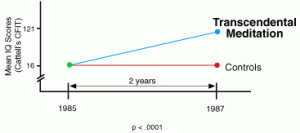 Students at Maharishi International University in Fairfield, Iowa, who regularly practised Transcendental Meditation, increased significantly in intelligence over a 2-year period, compared to control subjects from another Iowa university.
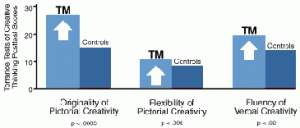 This study used the Torrance Tests of Creative Thinking to measure figural and verbal creativity in a control group and in a group that subsequently learned the Transcendental Meditation technique.
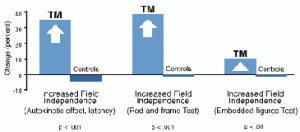 Field independence has been associated with a greater ability to assimilate and structure experience, greater organisation of mind and cognitive clarity, improved memory, greater creative expression, and a stable internal frame of reference.
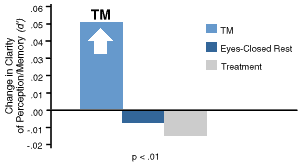 College students instructed in Transcendental Meditation displayed significant improvements in performance over a 2-week period on a perceptual and short-term memory test involving the identification of familiar letter sequences presented rapidly.
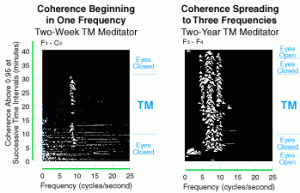 EEG coherence increases between and within the cerebral hemispheres during Transcendental Meditation. EEG coherence is a quantitative index of the degree of long-range spatial ordering of the brain waves.
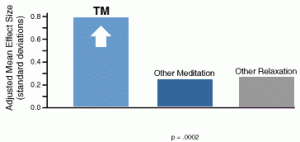 Self actualisation refers to realizing more of one’s inner potential, expressed in every area of life. A statistical meta-analysis of all available studies-of 42 independent studies-indicated that the effect of Transcendental Meditation on increasing self-actualisation is markedly greater than that of other forms of meditation and relaxation. This analysis statistically controlled for length of treatment and quality of research design.
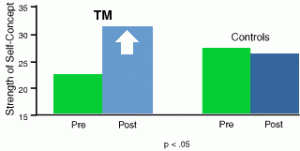 One month after beginning Transcendental Meditation, subjects experienced an improved self-concept in comparison to before learning the technique.
 This three-month study of managers and employees who regularly practised the Transcendental Meditation technique in a Fortune 100 manufacturing company and a smaller distribution-sales company showed that Transcendental Meditation practitioners displayed more relaxed physiological functioning, a greater reduction in anxiety, and reduced tension on the job, when compared to control subjects with similar job positions in the same companies.
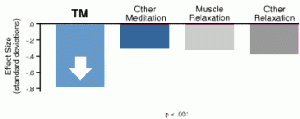 A statistical meta-analysis conducted at Stanford University of all available studies-146 independent outcomes-indicated that the effect of the Transcendental Meditation programme on reducing anxiety as a character trait was much greater than that of all other meditation and relaxation techniques, including muscle relaxation.
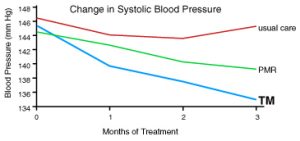 In a clinical experiment with elderly African Americans (mean age 66) dwelling in an inner-city community, Transcendental Meditation was compared with the most widely used method of producing physiological relaxation.
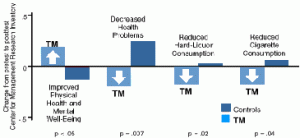 In two companies that introduced the Transcendental Meditation programme, managers and employees who regularly practised Transcendental Meditation improved significantly in overall physical health, mental well-being, and vitality when compared to control subjects with similar jobs in the same companies.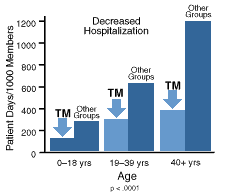
 Increased levels of the hormone cortisol in the circulation are well established correlates of both acute and chronic stress.
 Biological age measures how old a person is physiologically. As a group, long-term meditators who had been practicing Transcendental Meditation for more than 5 years were physiologically 12 years younger than their chronological age, as measured by reduction of blood pressure, and better near-point vision and auditory discrimination.
 Subjects were measured for changes in breathing rate during the practice of the Transcendental Meditation technique.
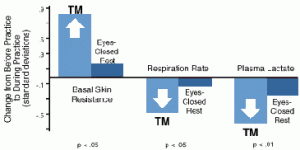 A meta-analysis, the preferred scientific procedure for drawing definitive conclusions from large bodies of research, found Transcendental Meditation produced a significant increase in basal skin resistance compared to eyes-closed rest, indicating profound relaxation.
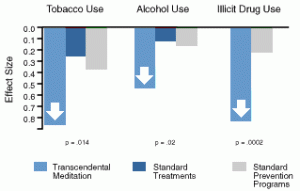 A statistical meta-analysis of 198 independent treatment outcomes found that Transcendental Meditation produced a significantly larger reduction in tobacco, alcohol, and illicit drug use than either standard substance abuse treatments (including counseling, pharmacological treatments, relaxation training, and Twelve-step programmes) or prevention programmes (such as programmes to counteract peer-pressure and promote personal development).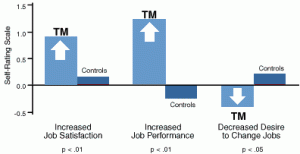
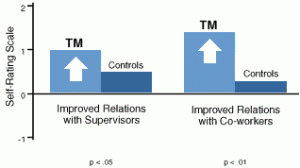 This study found significant improvements in relations with supervisors and co-workers after an average of 11 months practicing Transcendental Meditation, in comparison to control subjects.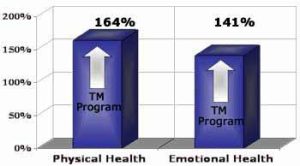
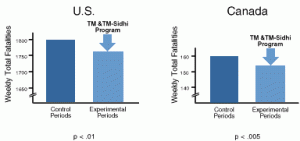 Two studies using time-series impact assessment analysis found a significant reduction in weekly fatalities due to motor vehicle accidents, homicides, and suicides in the United States (19821985) and Canada (19831985) when the size of the groups practicing the Transcendental Meditation and TM-Sidhi programme at Maharishi International University in Fairfield, Iowa, exceeded the square root of one percent of the U.S. population, or of the U.S. and Canadian population together for an effect seen in Canada.
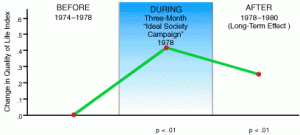 A prospective study was performed to assess the effects of the group practice of the Transcendental Meditation and TM-Sidhi programme on the quality of life in Rhode Island.
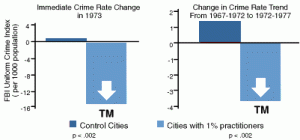 The results show that 24 cities in which 1% of the population had been instructed in the Transcendental Meditation programme by 1972 displayed decreased crime rates during the next year (1973) and decreased crime rate trends during subsequent years (19721977) in comparison to 19671972, in contrast to control cities matched for geographic region, population, college population, and crime rate.
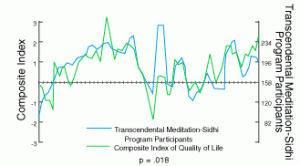 This study indicates that group practice of the Transcendental Meditation and TM-Sidhi programme improved the quality of life in Israel as measured by improvement on an index comprising crime rate, traffic accidents, fires, and the number of war deaths in Lebanon, and by increases in the national stock market and improvements in national mood.